Friday, 16 November 2018

Why The Politics of Breastfeeding Matter

Before I start talking about this little book, it's worth quickly discussing what is meant by "the politics of breastfeeding:" we are not talking about the "mommy wars" here. This is not about how women chose to feed their baby, and the author defends Sheila Kitzinger's statement that the only reason a woman should not breastfeed is if she does not want to. This is about the policies and commercial practices that affect breastfeeding rates and therefore public health outcomes.


Why The Politics of Breastfeeding Matter is written by Gabrielle Palmer, author of the bigger work The Politics of Breastfeeding. Gabrielle has done an amazing job of condensing down into this smaller volume all the salient points required to explain these complex ethical issues, whilst providing signposting to further information and activities.

This book discusses not whether you should breastfeed or not, but how external factors have influenced the making of this choice, especially for financial gain. From describing how the market for breastmilk substitutes came about, the book shows how it has become a major global industry, and puts its efforts into persuading carers to choose its products over breastmilk. The book then goes on to explain the unfair ways in which companies who produce artificial milks have marketed them: both historically and contemporaneously; in developing countries and in the richest parts of the world. For example, by making claims that are simply untrue, by giving out free samples to create a need when the mother's milk is gone, or by presenting advertising propaganda as medical fact. The ethical ramifications go far beyond trade descriptions: when we replace breastmilk with artificial milk we introduce serious health risks; and artificial milks and the resources needed to prepare them safely can be a serious financial burden. Gabrielle states: "The majority of people in our world live in conditions where the consequences of not breastfeeding are devastating."

This unethical practice is only half of the story of this book: the other half is what happens when governments, international bodies, activists and individuals try to fight back. Gabrielle demonstrates how these companies have used their economic power to undermine regulation, and how brazen they are in the face of the facts of their transgressions. Gabrielle shows us who is fighting for a fairer practice for families and the vulnerable, and signposts both to further factual information, and to where we can go to help.

This guide is so helpful for understanding the complex issues surrounding the marketing of breastmilk substitutes, and is impressive in its brevity. I highly recommend it to anyone who is interested in the ethics of consumption, and to those looking to choose breastmilk substitutes for their won family, to support them in making an informed choice. And if you find this interesting, and have the time, please do read The Politics of Breastfeeding too!


Tuesday, 6 November 2018

Why Breastfeeding Matters

This week I am pleased to be reviewing Why Breastfeeding Matters, by Charlotte Young. I have been a fan of Charlotte's website The Analytical Armadillo for years, and I'm a big fan of this concise series of guides, but I have read so many books on breastfeeding that I was initially skeptical that this would have anything new to offer this market.


I'm sure it won't come as a surprise to you that I was completely won over by this book. What Charlotte really conveys is not just why we should care about breastfeeding, but also why we should talk about breastfeeding. She points out that we lie in a society where midwives trained thirty years ago are featured as "experts" in the media, where misinformation is rife, where GPs are the first port of call for new mothers but aren't interested in understanding breastfeeding, and where formula companies have managed to flip the dialogue so that we talk about the "benefits" of breastfeeding rather than the risks of feeding artificial milks. As a result many people genuinely don't understand that formula can be harmful, that it has negative long term health implications, and that nearly all women can breastfeed, if they get the appropriate information and support. We have no general understanding of normal infant behaviour, and so many mothers look to artificial milk to solve their "problems." When obesity is in the news as a public health crisis, nobody mentions that breastfeeding rates have a strong negative correlation. The gut microbiome is also emerging as a public health concern, but few know that the gut of a breastfed baby is more acidic than that of an artificially fed baby, and as a result cannot sustain the same microbiome even if it received the same seeding. Not breastfeeding is also a major risk factor for SIDS. At the same time the NHS, local and national government are cutting breastfeeding support funding.

 This short book manages to provide great information on why we should care and talk about breastfeeding, as well as how we can support breastfeeding mothers, and ends with a handy guide to where mothers can find more information and support, because those are the true factors determining breastfeeding rates and longevity. This is a great little guide for expectant parents looking to make informed choices, and for those supporting them, especially those in a position of trust and responsibility. Yet another great guide from the Why It Matters series.


Monday, 23 July 2018

Growing Up Pregnant

This week I have been reading something a bit different: Growing Up Pregnant, by Deirdre Curley.


This book is an account of Ms Curley's experience of unplanned pregnancy at eighteen, and her journey into motherhood and adulthood simultaneously. At a time when birth culture is endeavoring to be more representative, it's good to hear the voice of young mothers.

The book alternates between Deirdre's own account and some factual information about pregnancy. I found the information to be very selective and sometimes dubious, and I think it could be entirely cut out of the book, because it is in the autobiographical sections that the book's value lies. If I were gifting this book, I would also give something more informative, such as The Positive Birth Book, alongside it. Ms Curley is not afraid to tell her own embarrassing experiences and to be honest about her own feelings. She benefited from very supportive family on both sides, and a secure financial situation, which I know is not the case for many teenage parents, but it is always beneficial to hear the experience of someone who has come out the other side of your situation, and I think many people going through unplanned pregnancy could benefit from this book. In particular, Deirdre's frank discussion of relationships, and adjusting mentally to your changing body, are open and reassuring.


I am keen to regift this book somewhere young mothers can read it, so if you can make this happen please do get in touch and I will send it to you.


Friday, 13 July 2018

Your No Guilt Pregnancy Plan

If you've been around long enough to remember my review of Why Human Rights in Childbirth Matter, you'll know I absolutely adore the work of Rebecca Schiller. As a former postgraduate student of human rights, and considering myself a birth activist in a small way, I am in awe of her work with Birthrights, as well as her excellent writing. Her ability to take a charged and emotive subject and explain it clearly and coolly is second to none. If you think that's hyperbole, I suggest you follow her Instagram stories (follow me too! I like making friends!). I was absolutely delighted to receive a copy of her latest book Your No Guilt Pregnancy Plan to review.


I have spend a long time reading this book. My copy is full of margin notes and post its marking important and interesting points. There are so many, I just can't share them all with you, but here are some of the features that I feel make this book stand out.

The tone of this book is rather unique. It's like having a supportive, caring, knowledgeable Doula walk you through your journey. Rebecca has the softest, calmest way of speaking, and I can hear it coming through in her writing. All the facts you  might need to know about birth, pregnancy, and early parenting, are presented clearly, but in addition to the discussion of your physical health and the choices you might have to make about your care, there are sections on subjects that you might never have considered in this context. When addressing each stage of your journey as a parent, this book prompts you to think about your mental health, your career, your relationships with those around you, and your personal identity. In an age when mothers are struggling to maintain their careers and increasingly suffering from mental health challenges, these additions to your preparation are crucial, but so often neglected. Rebecca is unafraid to tackle these difficult issues, and provides plenty of additional resources for those who need them through her website and links to other helpful organisations. These are helpfully placed within the book where discussion of the relevant topic takes place, rather than collected in an appendix, where they might not be read. There is a lot of outside input in the book, both in terms of the real life experiences of parents, and specific input from professionals such as psychologists.

The subtitle of this book describes it as a "revolutionary guide," and I really agree with that. It has all of the basic biological facts, but so much more. This book truly sees women as whole persons, in the way that we might wish society would. If you are prepared to be open to this approach this is a fabulous preparation for parenthood. It is definitely the book for the modern liberal, and the beautiful product of feminist progress.

I'd love to hear what you think of this book, do drop me a line!

Elizabeth

Tuesday, 8 May 2018

Why Home Birth Matters

I am a big fan of the Why It Matters series of detailed and concise guides to pregnancy, birth, and early parenting subjects, so I was quite excited to get my hands on the latest volume: Why Home Birth Matters, by Natalie Meddings.


I have given birth in hospital once and at home twice, and many of my friends and family have also given birth at home. Having been exposed first hand to a range of experiences, I was very interested to see what Natalie had chosen to include in her book. Birth is such an emotive subject, and home birth arguments often become polarised between those who only see the risks and those who refuse to see the risks. What I found was a delightful and realistic guide to home birth. As well as going through the practicalities and advantages of birthing at home (mostly focused on the set up in the UK), Natalie discusses why a home birth might not be appropriate for all mothers and babies, and why a home birth might become a hospital birth. Discussing how these transfers are not usually the life-and-death emergencies man suppose them to be gives a clearer idea of how home birth works: we are so lucky in this country to have access to very highly skilled midwives, who are able to observe that things may not be following the best course early on, long before an emergency occurs, and preventing it. Natalie reminds us that midwives have the same monitoring and resuscitation equipment at a home birth that they have in hospital. By going through the physiological processes of birth, Natalie highlights how "terrifying television portrayals...have about as much to do with real birth as porn does with real sex." I love this! But because most of us are only exposed to those media portrayals, many mothers may find that they are immediately criticised for considering a home birth. This book arms expectant parents with the facts that they will need to address any concerns from people they care about (top tip: if you don't care about a person, don't be bothered by their opinion on your birth. It's presumptuous of them to offer one). Natalie also shows beautifully how the processes of birth are supported in the home environment in a way they cannot be in a hospital, and how birthing at home stacks the odds of an intervention-free birth in the birthing parent's favour.

Bob and I on the sofa, seconds after his birth

There is only one thing in this book which caused me to hesitate. Natalie describes labour beautifully, abandoning the language of "stages" in favour of describing the process as a series of rooms the birthing person passes through. She describes the build up to labour as a time when you can still return to normal and speak between contractions, and labour as the time when you enter yourself and can no longer do this. This was not my experience, so I asked around, and found that it was not the case for many of my friends either. In fact, we hear time and time again of mothers being disbelieved when they tell their carers that they are in labour and close to birth, because they can still converse. I think this is something that i highly subjective, and should be applied with extreme caution.

Sausages and Bob coming down in the morning to find Baby 3 had arrived while they slept

I think this book will be very helpful for expectant parents considering their place of birth to make informed decisions, and to withstand pressure from others to capitulate and go to a hospital, where as Natalie points out, their chances of a physiologically normal birth are greatly reduced. Home birth is not the best option for every family, but it is a safe and enjoyable experience for many, and I hope this book will help them to see that!

Hospital was the best place to birth my premature baby

If you would like to learn more on this subject, I highly recommend Tell Me A Good Birth Story, your local Positive Birth Movement group, and Becky Reed's account of her work with the Albany group, Birth in Focus.

Saturday, 7 April 2018

A Midwife's Story

Last year I had a wee hunger to hear about different birth cultures around the world. I think it was fuelled by Sheila Kitzinger's accounts in her autobiography of the different birth cultures she encountered around the world. I read quite a few things that took me to various different parts of the world, including this little gem:


A Midwife's Story, by Penny Armstrong and Sheryl Feldman. I notice that it has recently been republished, so I thought I would share it with you. If you are interested in birth or the lives of women then this is a book for you. It is a beautiful, moving account of the lives not only of the midwife, but of the women of the Amish community which she served. Told with humour and without criticism, these stories give insight into the joys and challenges faced by Amish women giving birth. The writing style is easy to read, and I'd chose it over an airport paperback any day. If you enjoy Call the Midwife you'll love this one too.


I'm looking forward to reading A Wise Birth by the same authors. I hope some of you enjoy this book too! It really is a delight!

Sunday, 25 March 2018

Review: Trust Your Body Trust Your Baby

I was asked to review this book recently, and it's been a lovely read: Trust Your Body Trust Your Baby, by Rosie Newman. This book contains a broad span of parenting, including pregnancy, birth, breastfeeding, safe sleep, toileting, and attachment. Because it is a small book, and the range of topics is large, there is plenty of opportunity to follow up Rosie's copious references and look deeper into any particular topic. I would say that the subject is similar to Mayim Bialik's Beyond the Sling, but perhaps more accessible to those who find that work too "hippy." Trust your body is a holistic discussion, encouraging parents to listen to their instincts and to their baby, and to follow these two to find their own parenting style. In this respect it offers a healthy alternative to the artificially regimented baby books that have become so popular in the mainstream, written by people who have never had children of their own, and seem to have no knowledge at all of the beautiful dance that takes place between a parent and their baby.


This book is very well researched, and most of it is reinforced with reference to scientific evidence supporting a more instinctive parenting style. Because of this the reader is easily able to look up the author's references and cover a subject in more detail. For me, however, this was a bit off-putting: in many cases the author simply includes large passages of direct quotation from other books which I have already read, such as Ina May Gaskin's Guide to Childbirth, and Ruth Kamnitzer's account of raising her son in Mongolia. Because of this I would not recommend this book for people who have already read around this area, but as a good gentle introduction to those new to the subjects. The tone is kind and informative, and contains such beautiful insights into the author's own parenting journey. Definitely a good read for expectant parents looking for something to help them form their own ideas about how they would like to shape their journey in parenthood.

Saturday, 6 January 2018

The Birth of Homo, the Marine Chimpanzee

I recently read the latest work by the French obstetrician Michel Odent, famous for popularising the use of water in childbirth in the UK.


This is a very complicated work, and I am not ashamed to say that some of it is beyond my level of understanding, as a person without a background in biology.

In this book Odent puts forward his contribution to the hypothesis that homo sapiens in descended from an aquatic ape. Further to the established features such as our hairlessness, fat layer under the skin, the height of our larynx etc, Odent explores more unusual features such as the fact that we share menopause with certain species of cetacean; that we have a layer of vernix at birth in common with seals; and our crucial need for nutrients such as iodine and omega three, that come readily from seafood. He also points to the fact that newborn humans can swim automatically if placed in water, and the relaxing effect of water, both through sight and touch, on our minds and bodies.

As well as discussing this theory about how homo sapiens have evolved to be the way they are, Odent points to our own time as a turning point in human evolution. We know that there are many events surrounding birth that can result in changes in our epigenetics, that are then passed down to future generations. The study of the microbial nature of birth has become very fashionable, and has been shown to affect our health for the rest of our lives. While many who are concerned with the birth microbiota focus on the difference between vaginal and caesarean birth, Odent states that we should be more concerned about the difference between home and out of home (hospital, birth centre) birth. He illustrates this fundamental separation by pointing to the fact that the human placenta transfers vast quantites of maternal antibodies to the foetus as the pregnancy approaches term, such that at 38 weeks gestation the concentrations are the same between mother and foetus, and the foetal levels continue to rise, meaning that a baby born at term has higher concentrations of maternal antibodies than the mother herself. This means that the immune system of the baby is already prepared to deal with the microbiome with which the mother's immune system is familiar: crucially that of the home,a and not the hospital. Odent also wishes us to focus on the differences resulting from in-labour and pre-labour birth, again rather than between vaginal and caesarean birth. It is thought currently that labour is triggered by the production of surfectants in the baby's lungs. This is a feature of the baby's development, and so labour starts when the baby is developmentally ready to be born. We know that babies born by pre-labour caesareans are at greater risk of various health problems. babies born by pre-labour caesarean go through a very different hormonal experience, and there are repercussions of this for the development of their brain and hormonal system. There are also repercussions for the mother, who is more likely to experience placenta praevia in future pregnancies, and who has experienced an altered operation of her own hormonal system.

This is a richly detailed and referenced book, and I am keen to find out what more knowledgeable experts than I have to say about it! Odent's perspective on our time as a turning point in our own evolution is both fascinating and terrifying. I look forward to seeing what he produces next!

Saturday, 23 September 2017

Review: Why Mothers' Medication Matters

I was excited recently to get the chance to review Wendy Jones' new book Why Mothers' Medication Matters. I am such a fan of this series of concise guides, and also of Wendy! You can find out more about Wendy Jones and what she does (and get help) here and here. Wendy is a pharmacist who specialises in mothers'medication, and especially in the safety of drugs for breastfeeding mothers and their infants. She provides a service that supports mothers and health professionals in finding appropriate treatment. I have received help from Wendy myself, and she was very knowledgeable and supportive.


Wendy Jones explains that one of the biggest problems with medications for expectant and breastfeeding mothers, whose offspring may be affected by what they take, is that there is so little research done. It is almost impossible to set up an ethical trial that might affect the health and development of unborn babies and infants. As a result, manufacturers refuse to take responsibility for this research. We have all seen the disclaimer: "if pregnant or breastfeeding, consult your doctor or pharmacist." In this way the manufacturer passes the responsibility to the prescriber or retailer. This is confusing for a mother, when her doctor, pharmacist, and the patient information leaflet with her medicine all tell her something different. Dr Jones quotes studies that have shown that mothers are reluctant to believe reassurances about the safety of drugs in breastmilk. This leads to a blanket over-caution, which can harm the breastfeeding relationship, or mean the mother not receiving treatment, sometimes unnecessarily. This can have a negative impact on her health, or mean she stops breastfeeding when she wants to continue. Pregnant women are also often expected to go without help for various conditions, which treats them as reproductive vessels, rather than persons.

One problem is that sometimes health care professionals do not understand or appreciate the nature of breastfeeding. Over caution may lead them to tell a mother that she must stop breastfeeding altogether, or express and discard her milk for a period of time. While this may be the case, Dr Jones finds that this often happens when it is not necessary. We must not fail to understand that breastfeeding is not like formula feeding. Stopping breastfeeding can have a big impact on a mother and her child. buying artificial milk costs money. There will be an emotional impact for both parties. Treatment for post natal depression must take this into account: treatments such as CBT that require separation of mother and child are not suitable and might put the mother off getting help; breastfeeding itself has an impact on depression which should be taken into account. Artificial milk is not the same product as breastmilk, and the baby may not react well to it, as well as missing out on all of the advantages of breastmilk, such as immunological factors. A mother told to express and discard her milk may give her baby a bottle, which can lead to latch issues and nipple confusion, threatening the breastfeeding relationship. She may not have a store of expressed breastmilk, and may delay treatment until she has created one, which may affect her health. She would also be at risk of blocked ducts and mastitis because expressing is not he same as breastfeeding for her breasts, and she may not express frequently enough, as it is inconvenient. This could also create a supply problem. Where mothers hear poor information on breastfeeding from their care givers they come to doubt their medical opinion and look elsewhere for help, which could be dangerous. Appropriate breastfeeding knowledge from the HCP can prevent this.

There are several different situations in which mothers might need to know about the safety of their medication. Some are straightforward and predictable, such as in pregnancy and breastfeeding, but some are not. Mothers with preexisting conditions might arrive at their due date with no idea whether their medication is suitable for breastfeeding. As breastfeeding continues for longer, the issue of breastfeeding mothers receiving fertility treatment might arise. Tandem feeding mothers have babies who might be affected by medications in different ways. Some mothers have chronic conditions, and sometimes treatment is urgent. All of these are situations in which specialist information is required. Dr Jones quotes NICE Maternal and Child Nutrition Guideline PH11 (2008) recommending that prescribers/dispensers consult supplementary sources; support continuation of breastfeeding where possible; recognise the consequences of ending breastfeeding for mother and child. I.e. the BNF is not sufficient reference. Dr Jones points to the LactMed database and the UKMI specialist centre for addressing the safety of drugs in breastmilk, among others, as appropriate resources for HCPs. She finds that too many health professionals will not go beyond the BNF, partly because they do not value breastfeeding over artificial milk feeding. In practice most health care professionals receive very little training in this area, and their thoroughness tends to depend on their own experiences of breastfeeding. Additional training in this subject for GPs has had very low take up, and those who did take it up were mostly women and parents of breastfed children. Adult hospital wards are not set up to accommodate expression and milk storage, and may be hostile to it. I was particularly struck by Dr Jones example of hospital policies on MRIs and breastfeeding, which stipulate a 24 hour cessation of breastfeeding, directly opposing professional guidelines and the facts about the half lives of the medications.

So what are Dr Jones' conclusions? "When I think about what I want doctors to know about breastfeeding and the safety of drugs in breastmilk, it boils down to this:

  • how to signpost to a local breastfeeding specialist
  • how to access databases and expert books on the safety of drugs in breastmilk."
I can only wholeheartedly agree with Dr Jones when she says that "pregnancy and lactation are normal human states and mothers deserve to have their medical conditions treated and managed appropriately, just like everyone else." For me this makes it clear that the subject of mothers medication is a feminist issue. This book is fantastically thorough and informative, with clear signposting to further resources for both mothers and care professionals. I would hope that mothers would read this book to make themselves aware that as a specialist subject, they may need to do their own research into their treatment (and how to do so), and that health care professionals would also read it to understand why they should engage in finding the appropriate treatment for their patients who are pregnant or breastfeeding.

Sunday, 30 July 2017

Why Starting Solids Matters

Baby Three has just passed six months, and we decided he was ready to start eating solid food, so I was delighted to receive a copy of Why Starting Solids Matters to review. Blog regulars will know that I love this Why it Matters series, and I also appreciated Dr Brown's previous book, Breastfeeding Uncovered, so I had high hopes of this one! It arrived just at the right time to inform our decisions about introducing Three to his first foods.


Dr Brown starts with a fascinating discussion of the history of infant feeding and the introduction of solids, in both far and near history. This is incredibly relevant because it informs our ideas about how and when we introduce solids today. I had no idea that our ancestors were introducing solids much, much later than we do today. Dr Brown's discussion of why we currently introduce solids at six months is highly pertinent. Despite the fact that the UK guidelines changed from four months to six months in 1994, twenty three years ago, I still know mothers who have given their children food early. When I asked why, I was told "because it says from four months on the packet." Interestingly, as Dr Brown explains, this is a violation of the WHO code, but not UK law. Dr Brown points out that there is a significant change in development between four and six months of age, such as the ability to sit unaided and the loss of the tongue thrust reflex, which are relevant to both puree and baby led weaning. Amy puts it beautifully: "babies develop externally to self-feed at about the same time they develop internally to cope with that food. It's as if Mother Nature intended it." These babies weaned early are at increased risk of infection, amongst other things, both because of the intake of food, and a reduction in the amount of breast milk consumed. Dr Brown also dismisses the idea that there is any "golden window of opportunity" that can be missed when introducing solid foods.


Dr Brown's discussion of the baby food industry is sadly reminiscent of that of the artificial milk industry: it is a tale of exploitation for profit, without concern for welfare. Like formula manufacturers inventing "follow on milk" to get around legislation prohibiting the advertising of infant milks, baby food manufacturers have created "stages" to encourage parents to move gradually through their range of products. Looking at the contents of prepared foods, it seems that many are unexpectedly high in sugar, and can contain surprisingly little of the main ingredient. While their occasional use may not be harmful, a diet of exclusively prepared baby foods would be too high in sugar and protein, and the manufacturers' suggested portion sizes exceed the recommendations. Furthermore, Dr Brown cites studies which have shown a negative correlation between the amount of prepared foods consumed, and the amount of fresh fruit and vegetables the child will consume at preschool and primary age.


Parents today might choose to eschew puree or spoon feeding their babies and instead follow the Baby Led Weaning (BLW) approach popularised by Dr Gill Rapley. This is an approach under which babies are fed family foods from six months, and feed themselves rather than being fed by the caregiver.  Dr Brown points out that there is yet little scientific data on BLW, either in support or criticism of it, but she herself is engaged in research into the impact of different throroughnesses of the approach. She highlights that there is no evidence on the benefits of puree of spoon feeding either: it is simply what has been done. The emergence of BLW has coincided with the change in recommended age for starting solids from four to six months, which makes the approach feasible. It is certain that later introduction of solids leads to reduced fussiness, a lower risk of overweight, and a lower risk of infection. Allowing babies to feed themselves means there is little risk of choking, since they develop the ability to move food around their mouths simultaneously with the development of their manual dexterity, and ability to pick up smaller and smaller items.


Dr Brown's main point is that more important than which method you chose, is that you feed your baby responsively. Like breastfeeding, we should follow our babies cues, and look to them to determine when and how much they should eat. I certainly agree with her statement that "responsiveness is a general parenting ethos rather than just about eating." This is an approach that hinges on trust: trust that you will provide what they need; trust that they will consume what they need. The idea is based on the fact that most children are born with the ability to be "satiety responsive:" i.e. to stop eating when they are full. However, social factors can override this over time. Preschool children are still able to self regulate, but primary aged children have been shown to be significantly less so. The idea of eating at set times can be a factor in this, as can encouraging children to finish what's on their plate, and celebrating with food. Restricting foods has been shown to be counterproductive, and pressuring children to eat can be harmful. The more you pressure a child to eat a food,t eh less they like it. Using food to shape behaviour as a bribe for eating other foods, as a reward or comfort, or withholding it as a punishment, is harmful for eating habits and puts children at increased risk of overweight. Bottle feeding faces more challenges to responsive feeding than breastfeeding, such as encouraging a baby to finish a bottle, or a baby gulping down more milk than they need because it is flowing into their mouth, whereas the breastfed baby must work to extract the milk. Breastfeeding parents must trust that baby is taking enough milk at the breast. Responsive milk feeding leads to satiety responsive toddlers.


Dr Brown's book ends with a ten point summary that can support most parents, and should be stuck in every red book. Her focus on responsive feeding shows us how we can take the practicalities of different family lives into account and look at the bigger picture of how we feed our babies and young children to their best advantage, and also how we can sidestep exploitation by commercial interests. I also love her voice; her tone of writing. This is yet another fantastic book from this series. I hope it finds its way into the hands of health visitors and parents across the country.

Sunday, 4 June 2017

The Positive Birth Book

I don't know whether I have mentioned this before, but in the "real world" (although on as well as off the internet) I facilitate a local group for the Positive Birth Movement. The founder and leader of the Positive Birth Movement, Milli Hill, has poured her extensive knowledge and experience into The Positive Birth Book, and I was delighted to receive a copy to review.

This book is a really fresh approach to thinking about pregnancy and birth. Milli starts the book by looking at how our society sees and portrays birth, and how this affects the ideas pregnant women have about their own approaching births.Then she settles into an honest description of what birth is actually like, taking the medical division of the three stages of labour (active labour; birth; birth of the placenta) and turning it into a fourteen stage journey, plus an exploration of the experience of cesarean birth. Like any conventional book on birth there is a certain amount of myth expelling to be done, and there is a balanced discussion of the various coping strategies and methods of pain relief that most women can choose from during labour. What you won't find in a conventional birth book are Milli's two steel beams of choice: you have a choice; you have human rights in childbirth. These two are fundamental to improving women's experiences of childbirth. Time and time again I hear women describing how they are "not allowed" to do a particular thing in relation to their birth, be it give birth vaginally, carry past a certain gestation, or give birth in a place of their choosing. Doctors and midwives do not have the authority to tell women what to do with their bodies. Milli follows this statement of choice with a detailed discussion on how to make a birth plan that works for you, and what you might like to consider. She discusses equally different birth place options, and her "What if..." section can be a real help in working through any unexpected experiences along the way. Finally she ends with a section on "The Birth of a Mother," seeing the experience of birth through beyond the arrival of the baby.

I love the tone of this book. It's informal, but at the same time manages to convey a vast amount of detailed information. The real life birth stories that illustrate each section really help to do this, turning the theory and facts on paper into relatable human experience. Milli isn't afraid to deal with subjects that are often neglected but are life changing for women, such as having a child with an illness or disability; loss; birth trauma; postnatal depression; puerperal psychosis; or premature birth. This frankness can only benefit women who find themselves facing these situations. There are some really useful tools in this book too. Milli is skilled at pointing women at where they can find the highest level research and guidance on important subjects. Her "steel beams" teach women that the decision making for their births is their own, that the power lies with them. The amazing visual birth plan icons designed by Kate Evans help women to make their own choices and convey them to their care givers. You can download these icons for personal use (and for free) here. The BRAIN and HEART acronyms are great for helping women to feel in control when facing the unexpected.


Usually I recommend that every woman read Ina May Gaskin's Guide to Childbirth. That is a wonderfully inspiring ode to what the female body is capable of, and should give every woman confidence in herself. However, I have had some friends tell me it is too "hippie" for them. Well, this book isn't hippie, but it isn't conventional either. I think The Positive Birth Book is my new go-to for expectant mothers, and it's certainly suitable for their partners and supporters. If you are giving birth in the near future I would definitely recommend this book. Thank you Milli!

Monday, 15 May 2017

My Birth Planning Journal

I'd like to share today a book that was quite useful to me when I was waiting for baby 3's arrival.


This is a relatively new venture from the Happy Birthing Company: a guide to planning and engaging with your birth.


I agree so strongly with this statement on the back cover. You can't predict what kind of birth you will experience, you can't really choose to have no complications, but you can stack the odds of getting your desired outcomes in your favour. I prefer the language of birth preferences rather than plans, because I feel this better reflects the reality of birth. We might prefer not to have a medicalised delivery, but if we have informed ourselves about the circumstances under which one might be necessary, and explore how we might like it to go in such eventuality, we will surely be in a better position for a positive birth than if we only plan for the outcomes we want but face the situation we don't.                                                                              


This lovely little book functions as a set of prompts for exploring your own birth preferences. Whether you are starting with a clear idea of what sort of birth might be the right one for you, or if you are starting right at the beginning of the journey with no ideas at all, these prompts can really help you to make your own informed decisions about birth. Small, light, and spiral bound so that it stays open and flat, the book is ideal for tucking in with maternity notes or into your birth bag (you can also download a PDF). It has plenty of space for you to write your thoughts and preferences, as well as prompts to encourage you to do your own research about important decisions.


This little book was a great tool for Husband and me in preparing for the birth of Baby 3. It provided the starting point for important conversations and decisions that we had to have, and I highly recommend expectant families use it in this way: as a guide and starting point for communication with each other and with care givers, or perhaps a doula. I think that the range of subjects mentioned will give every expectant parent something to think about, something they need to research further and inform themselves about. I hope this really takes off, because it has the potential to make a big difference to outcomes for mothers.


Thursday, 16 March 2017

Yarn Along

There's not much reading going on here this week, but I am really enjoying listening to Untold: The Daniel Morgan Murder. This is a podcast telling the true story of the murder of a private detective in the UK from the 1980s. It will definitely appeal to anyone who enjoys Serial. Speaking of which, I see the Serial production team have a new podcast coming out soon, which I'm looking forward to.

I am still working on the blue tit soaker, but in reality I have barely touched it. I'm so busy, and the little ones wake at night, so I'm either taking care of them or sleeping! As substitute I'd like to share with you these longies that I finished a couple of weeks ago. The photos are poor because there is no light and the baby is sleeping (yes on his front. He will only sleep that way), but I love the texture of these trousers. The yarn is Wendy traditional aran. It's cheap, and feels scratchy in the ball, but it's incredibly springy, and soft after washing.

Don't forget to check out the Yarn Along link up, and let me know what you're crafting this week!

E

Tuesday, 14 March 2017

Breastfeeding Uncovered Giveaway!

This review has been a long time coming, since I received the book just before baby three put in his appearance, but I especially want to share it with all my friends who support mothers. Breastfeeding Uncovered explores the factors that influence whether mothers want to breastfeed, whether they do breastfeed, and how long they breastfeed for. In the first chapter Dr Brown explores why these questions are worth exploring. She identifies the key issues as: that there is a health benefit from increasing breastfeeding rates; and that mothers who want to breastfeed but don't feel upset, guilty and criticised, and this can be avoided. The strength of her discussion of these issues is a detailed explanation of the statistics involved in understanding the health outcomes of breastfeeding versus not breastfeeding, for both mother and baby. We all know someone who was raised on artificial milk and is hale and hearty, but in the same way that we all know someone who smoked since childhood and lived to be a hundred, this does not mean that breastfeeding isn't the better option when trying to skew the odds of good health outcomes in our favour.


We live in a society that assumes bottle and artificial milk feeding, and this creeps in to our lives invisibly all the time. Baby dolls come with bottles, and pictures of toddlers breastfeeding their dolls are deemed controversial. Many women never see a baby breastfed until they have their own. Much of this book is concerned with how this affects our breastfeeding decisions and outcomes. Our societal expectations of mothers and babies in general are written by this assumption of bottle feeding as the norm, and this makes it hard for mothers to decide to breastfeed. For example, we can't measure how much our breastfed baby is getting, only the outcome that they are healthy. A mother who finds herself spending a lot of time, day and night, breastfeeding a baby may become overwhelmed, if she was expecting her baby to just have a ten minute bottle every four hours like her friend's bottle fed baby, or her mother says she did. Mothers may also be embarrassed to breastfeed their babies out and about, and either find themselves stuck at home (miserable), or bottle feeding outside the home, which rapidly becomes bottle feeding altogether. They have grown up thinking of their breasts as sexual, and have heard of women being asked to leave places for breastfeeding. I have heard husbands undermine breastfeeding because they feel they need to feed the baby to bond with it (not true. Why not try wearing it in a sling while mum has a nap or out for a stroll, or taking a bath with the baby, or finding a special song that only dad sings to settle the baby?), because they feel that their partner's breasts are sexual, and somehow their property (hello? A woman's breasts belong to her alone, and they are evolved for feeding babies), or because they are embarrassed that other men will see their wives breastfeeding (they should be proud! Look what a great start you are giving your children!). The attitudes of partners and other family members are so influential in whether and how long a mother breastfeeds her baby.

In conclusion, Amy Brown sets out an eighteen point manifesto for a breastfeeding friendly society, which I reproduce here with her permission:

Step 1: Teach mums, and those around them, how normal it is for breastfed babies to feed frequently and why this is important.

Step 2: Tell all new parents and those around them about normal baby sleep, why feeding doesn't affect is, and support them in other ways to get more rest.

Step 3: Tell parents and those around them about normal patterns of weight loss and weight gain in breastfed babies, and why this doesn't mean that they are underweight.

Step 4: Be more aware of how experiences during childbirth may affect breastfeeding. Invest in maternity units to give staff more time with mothers, to help reduce interventions during birth, and ultimately increase breastfeeding rates.

Step 5: Early hospital practices can make a significant difference to breastfeeding. The more Baby Friendly practices a hospital adopts, the better their breastfeeding rates. So it's obvious. Make all hospitals (and neonatal units) Baby Friendly!

Step 6: invest in expert support services for all breastfeeding mums right from the start of breastfeeding.

Step 7: Support new mothers to feed and mother, don't abandon them to juggle everything. Mother the mother.

Step 8: Bin all the rubbish baby care books.

Step 9: Support employers to be breastfeeding friendly.

Step 10: Stop this ridiculous body image pressure on new mothers and come to terms with our own illogical sensitivities and prejudices about human milk and the female body.

Step 11: Give new mothers the emotional and practical support they need, every step of the way.

Step 12: Breastfeeding support needs to be tailored to individual needs.

Step 13: Educate dads to be the breastfeeding supporters they can be.

Step 14: Invest in health services so more health professionals have more time and more knowledge to support breastfeeding mothers.

Step 15: Educate the public to stop being idiots, or at least do no harm.

Step 16: Regulate products that are designed to create anxiety in new mums.

Step 17: Crack down on brand advertising and prevent industry access to professionals and parents.

Step 18: Step up and fund healthcare and breastfeeding support.

I would love for everyone supporting mothers to read this book. For those of us living in the pro-breastfeeding community, we can gain understanding of why women make the choice not to breastfeed. For those in the wider community, knowledge of how our actions and environment can affect these important decisions must surely guide our behaviour.

Here's the exciting bit: Amy has very kindly sent me an extra copy of the book to give away to a reader! To enter, just pop a comment below, and I'll draw the winner on Sunday night! I can only really pay UK postage, but if you're further afield and happy to pay most of your own postage, then go ahead and put yourself forward.

P.s. what targeted advertising did I receive when I looked at the book's Amazon page? Artificial milk (formula). Go figure.

Wednesday, 8 March 2017

Yarn along

Today I am attempting to post on my tablet while feeding baby three, so it's a bit of an experiment! I thought I'd submit to Ginny's yarn along. Knitting this week is a soaker in the rather gorgeous blue tit yarn by West Yorkshire Spinners. I've been fighting the urge to cast on a cardi for myself this week. I fancy something simple and open fronted, perhaps the Harvest by Tin Can knits. I love all the patterns in their Simple collection, and they're free, so if you haven't discovered them yet do have a look. I currently have very little knitting time because three NEVER wants to be put down. This always gives me castonitis!

Reading this week is just some quick fiction between factual books. Jodie Picoult is very readable. If you like her style but prefer an English voice I highly recommend this little gem. Enjoy!

If you're missing my parenting related book reviews do pop back soon because I have two in the works, and one comes with a giveaway, which I'm hoping to run over the weekend. In the mean time stay creative, keep reading, and see you soon!
E

Friday, 24 February 2017

Robots and Gadgets

Recently Sausages was sent his very own book to review, so here is his very own book review!

"I liked this book very much. I liked all the different activities and the stickers. I liked designing my own robots the best."


The book contains a wide range of activities including sticker pages, puzzles, colouring and drawing, and creative challenges. It was really well suited to Sausages, who is a methodical, cognitive sort of chap. The age range is 5-8. Sausages is 6 and a good reader. All of the reading and activities were nicely within his capabilities and he needed no input from me, although we did have lots of good chats about the interesting problems set within the book.


Because of the variation of activities in this book I think it would be great for travel entertainment. So often I pick up a magazine or colouring book to entertain the boys on a plane or ferry, only to find there isn't really enough there to hold their attention. I see online that there are quite a few books in this Factivity series, so I'll probably order a couple for the trips we have lined up for this year. This one on coding particularly appeals to me.


The explanations and factual writing are good for developing comprehension skills. They prompted a lot of discussions and clearly gave Sausages plenty to think about.


The stickers and drawing problems offer opportunities to support fine motor control.


What Sausages does Bob must also do, of course! But this book was a long way above his level! I'd love to hear your suggestions for similar quality activity books for this age group, our clever boy needs us to step up a level!

Elizabeth

Saturday, 22 October 2016

Yarn Along

I haven't posted a Yarn Along for a little while, but I have been enjoying everyone else's posts, so I thought I'd squeeze one in this week. I'm reading something I don't really know what I think of, so I'll wait a bit to post about that. Instead I'm sharing what the boys are reading this week:


Hello Baby has become a much loved classic in this house. It's the story of a home birth, told from the perspective of a small boy. I've had it out to help the boys prepare for our planned home birth for baby 3. Rather wonderfully, Sausages has been reading it to Bob, and adding in details from Bob's birth off his own bat. I might have had the odd secret proud tear at that one! I really feel their wonderful introduction is the foundation of their good relationship, and I'm hopeful that they will also meet their new sibling under good circumstances.

The two Sears books I bought this year for Bob, because he is a lot younger at nearly three than Sausages was at the same age. He's not delayed or anything, I just didn't appreciate how unusual Sausages is. I bought these books with a view to helping him develop some expectations of what life will be like in our house when the baby arrives, and to understand that the baby in my tummy will be coming out and joining our family as a whole new person! These are big concepts when you are two! The books are quite American, but beautifully explain these facts for a small child to understand. I'm pretty pleased with them.


I have two big Christmas projects on the needles, both moving at a snail's pace, so I don't want to post them over and over. This week a friend offered to do an incredibly kind thing for me and take care of bob for six hours. That's a long time! And she has a toddler of her own! In the end it didn't come off, but I wanted to say thank you and don't have funds for flowers at the moment. I do have this lovely soft yarn though! I knitted myself a pair of these mittens earlier this year and love them, and I hope she will too.

Happy knitting and reading!

E

Sunday, 2 October 2016

Why Human Rights in Childbirth Matter book review

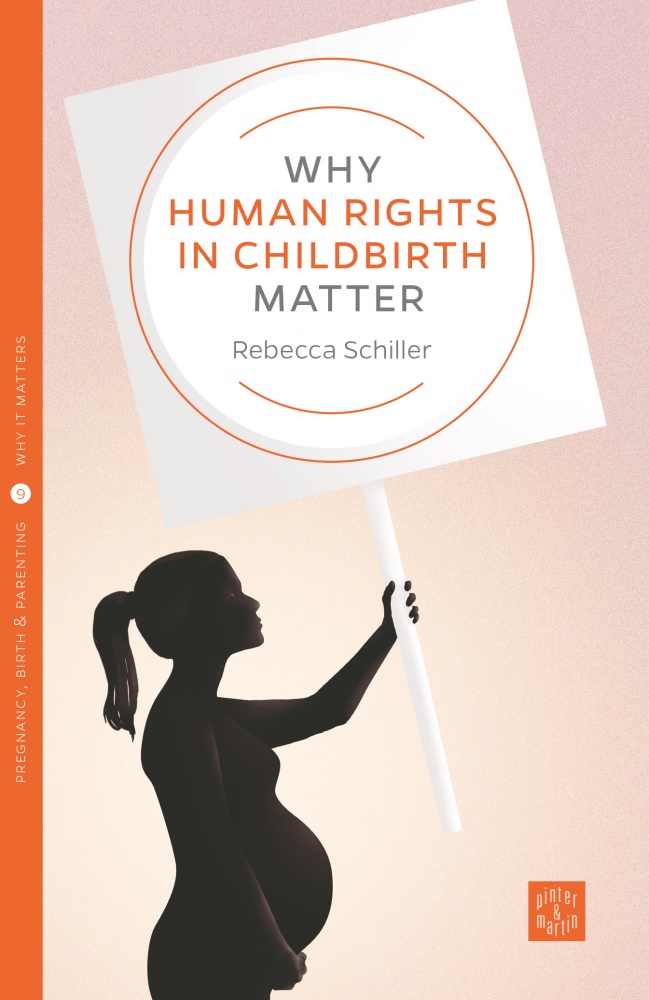
I mentioned last week that I had been privileged to attend the Positive Birth Movement's Be the Change event in London, at which I had met and heard some great speakers from the birth community. One lady I was desperate to hear was Rebecca Schiller, and I was lucky enough to have a chat with her and come away with a copy of her book for myself.


Rebecca is the chief executive of Birthrights, an organisation based in the UK that promotes respect for human rights in maternity care. I suppose many readers know that I was a keen student of human rights before I became a mother at home, with a particular interest in the rights of vulnerable groups, so this book is everything I want to read! The book is split into two main parts. The first half of the book explores the human rights issues surrounding childbirth, including what the relevant rights are. The issues are explored with reference to specific cases of human rights abuses. This is harrowing, but I feel that there is such a strange haze around the human rights of pregnant and birthing women that without these real life examples of abuses that have actually happened readers would struggle to work through the subject matter of the book in their own minds. Rebecca goes to great lengths to explain how pregnancy and childbirth have long been used as reasons to divorce a woman from her rights and humanity. A patriarchal medical environment has taught us to justify the violation of women's rights in all sorts of terms, but a woman does not give up her rights to privacy or autonomy or health just because she is pregnant or giving birth. Since these reproductive rights are fundamental to the lives of well over half of women around the world. their continual violation constitutes a major human rights issue, and compounds the marginalisation and inequality of women. Rebecca points out that by improving the standing of a woman's human rights during childbirth in developed countries we can support the protection of those rights throughout the world.
One thing I do feel Rebecca skirted around, however, is the matter of US influence in the healthcare systems of some of the poorest parts of the world. It is known that the US system of maternity care is in crisis. Their rates of maternal deaths are rising not falling, and their rates for cesarean birth are well over WHO recommended levels. For decades the USA has constituted a substantial power in the United Nations and programs of international aid and finance. During this time it has made a prerequisite of aid and development parcels a healthcare and pharmaceuticals system that reflects its own system of private insurance and healthcare paid for at the point of access, unlike the majority of European healthcare systems that are free at the point of access (which is very different from free). The case quoted of the mother who could not afford drugs to end a postpartum haemorrhage that would have ended her life (p67), and those women detained after birth until their care could be paid for (p72), are the clear victims of these policies.

The second half of the book forms a handy guide to human rights, providing specific guidance applicable to women in the UK. This is followed by suggestions for further reading on the subject, and details of other relevant organisations, including those involved in promoting human rights for pregnant and birthing women around the world. This can provide us with practical tools for defending our own human rights in childbirth, those of women birthing in our society, and the rights of women around the world. I highly recommend that everyone involved in maternity care read this book, and especially those going through it. Not to scare them, but to empower them! If you want to read more by Rebecca on the subject this short ebook is also available.


This book is another title from the "Why it Matters" series of concise works on pregnancy, birth and parenting. I am a big fan of this series, and wish all prospective parents could have access to it. All children's centres should have them in their lending libraries!

Saturday, 24 September 2016

Baby Days

I finished this book last week and was completely blown away! This is a collection of birth stories, all told from the perspective of the midwife and the mother, and often a sibling or birth partner too, and accompanied by stunning photographs of the labours, births, and postnatal moments. The stories include many of the different forms that birth can take, such as cesarean section, breech presentation, multiples, hospital and home births, and really show what can be achieved for women by giving the kind of care Becky's team of midwives were able to offer. Continuity of care and supporting the mother to make informed choices has real impact in terms of outcomes, and this can clearly be seen in the stories told here. The book ends with a comment on this type of care by Sue Brailey that everyone working in maternity services would benefit from reading.


The photos are the absolute star of this book. Taken from the midwife's perspective, they are both intimate and graphic. I haven't reproduced any because I feel that you really have to read the book, but you can get a feel from the cover. When this book first arrived in the post Sausages (6) took it from me and wouldn't give it back until he had inspected all the pictures. He has seen childbirth before, including being present at Bob's birth nearly three years ago, and he found them fascinating, not shocking. I picked the book up and began flicking through the photographs, thinking that I would return to read the book properly at another time, but the set of a baby who turned from vertex to breech between contractions in the second (expulsive) stage had me hooked, and I just had to start reading the stories! I was privileged to meet Becky Reed at the recent Positive Birth Movement event "Be The Change," and she commented that she hadn't been convinced about leaving that story in, but the fact that Ina May Gaskin commented positively on it in the introduction convinced her. I'm very glad she did!


A little knitting and finishing this week for the gown for baby 3. I ran out of yarn without being able to make it long enough to close with buttons like the previous one I made, so it will have to be daytime wear, but that's fine. The bamboo yarn is ever so soft, and the ladybird buttons are very sweet! Bob chose them himself.


I'm linking up to Ginny's yarn along this week, so do pop over and check out what others are making and reading. And if you do have any recommendations for must-knits before baby 3 arrives, please do let me know!

E

Monday, 5 September 2016

Vegetable Biryani

I've had a lot of requests this week for my vegetable biryani recipe, so here it is!


I really enjoyed watching the recent BBC programme The Chronicles of Nadiya. In the second episode Nadiya makes a delicious looking goat biryani in a ship's galley, and that set me craving one, so I had a little look around the internet and put a few recipes and ideas together. I just used whatever veg I had in the house/garden, as is my want.

Chop root veg and onion, scatter in a few tomatoes and a fresh chilli if you have it, and roast in the oven for 15 minutes in a little vegetable oil. Mix together about a litre of stock (I used lamb bone broth from my freezer stash, but veg would of course be fine), with two teaspoons curry paste, chilli flakes if you're not using fresh, back mustard seeds, and a tsp of turmeric. Oil your casserole. You will need a lid, so if you have a Le Creuset or similar this will be perfect. Remove the vegetables from the oven and mix in any lighter veg, such as beans or courgette. Staring and ending with rice, make alternate layers of veg and rice in your casserole. Pour over the stock and cook around 180 degrees C for 45 minutes to an hour.

I used 300g basmati rice, and I'm pretty confident it will do two meals for us. Serve with yoghurt and flatbreads if you wish. I think this would work very well in the slow cooker too, let me know if you try it!

Enjoy!